
When people learn that I do ultra long trail runs and CrossFit, they instantly mention rhabdomyolysis. First, I have gone to CrossFit since 2018 and was an athlete in high school. Right now, I am the most fit I have been and continue to improve. The CrossFit WOD that always brings up rhabdomyolysis (rhabdo) is Murph. It’s a “hero” workout, which are the most difficult CrossFit workouts, and are dedicated to deceased soldiers. The Murph is named after Navy Lieutenant Michael Murphy, who was killed in Afghanistan in 2005. Remember the movie Lone Survivor? LT Murphy is the one that called for help when the Seal Team was under fire. We do this WOD every Memorial Day. We honor the bravery of LT Murphy. We also remember the other Seals that lost their lives. BTW, hero WODs are some of my favorites. This WOD can be daunting for the untrained athlete. Yes, it can cause rhabdo. Still, there are ways to scale the WOD. Before you think, I’m lying, I have done this WOD at my heaviest of 280 lbs. But let’s get back to rhabdo.
What is rhabdomyolysis or rhabdo for short?
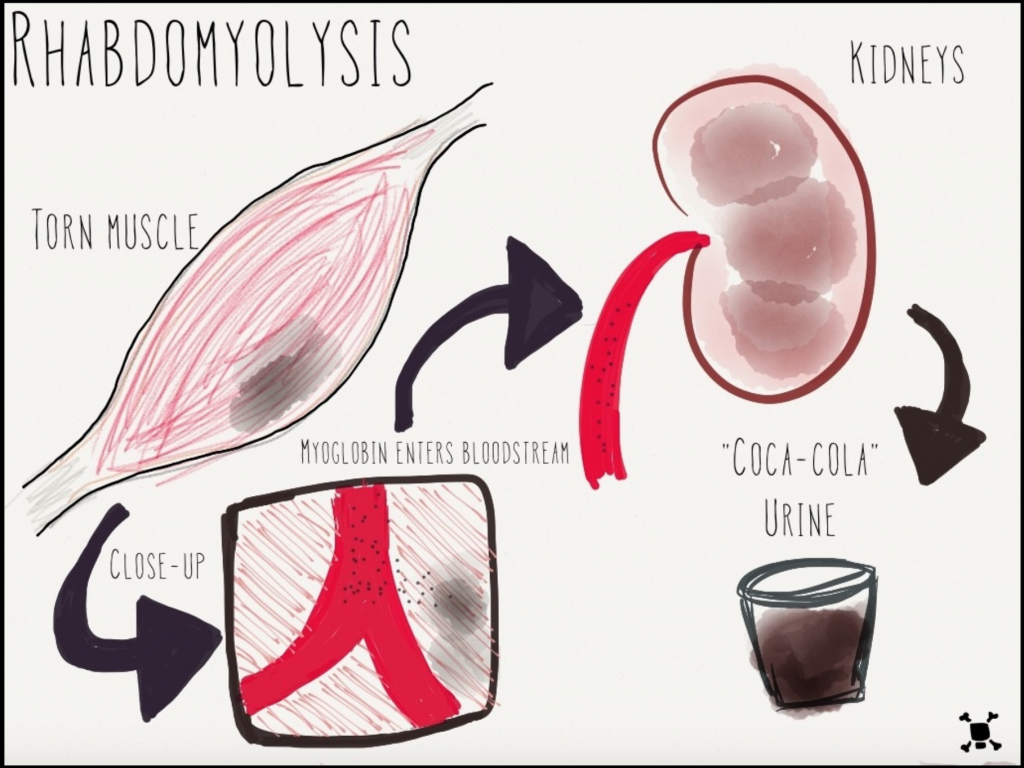
PubMed defines rhabdomyolysis as a complex medical condition that involves the rapid dissolution of damaged or injured skeletal muscle. This is where I will nerd out. This disruption of skeletal muscle integrity leads to a direct release of intracellular muscle components. These components include myoglobin, creatine kinase (CK), aldolase, lactate dehydrogenase, and electrolytes into the bloodstream and extracellular space. Rhabdo can range from having no symptoms with only an elevation in CK levels. It can become a life-threatening condition with an extreme elevation of CK. Electrolyte imbalances can occur. Acute renal failure develops. The body’s clotting ability can go into overdrive, known as disseminated intravascular coagulation (DIC). Bad news and sometimes dialysis is needed to correct the imbalances. Treatment for DIC is much more complicated but just know it requires the treatment of the underlying condition.
Rhabdo often occurs with direct traumatic injury. I’ve seen it with elderly people that have fallen and aren’t found for hours to days later. It can also come from drugs, toxins, and infections. Muscle ischemia, electrolyte and metabolic disorders, and genetic disorders also cause it. Prolonged bed rest and temperature induced states are extra causes. I have also seen rhabdo in young adults when pushed too hard in extreme workouts. The American College of Cardiology, American Heart Association, and National Heart, Lung, and Blood Institute define rhabdo with specific criteria. It includes muscle symptoms with marked CK elevation that is greater than 11 times the normal limit. Additionally, it involves creatine elevation with pigment nephropathy and brown urine with myoglobinuria. There is a classic triad of symptoms that occur with rhabdo- muscle pain, weakness, and tea-colored urine.

How do endurance sports and CrossFit come into play with rhabdo?
CrossFit is a form of high-intensity training that combines aerobic and resistance exercise in short repetitive workout sessions. It seems reasonable that exercising large muscle groups at a high intensity can cause some breakdown of muscle tissue. The same can be said for long-distance running. Rarely are dangerous levels seen in the conditioned athlete. There is a risk for the unconditioned athlete. Little exercise experience, eccentric muscle contraction, history of electrolyte abnormalities, low protein diet, certain medications (high cholesterol meds, i.e. statins), alcohol use, and creatine supplementation put one at increased risk for rhabdo.
Reducing the risks
Strategies used to reduce the risk of rhabdo include gradual introduction to intense workouts and runs. Those at higher risk for development of rhabdo aren’t the beginner but are those with a reasonable baseline for fitness. Why? Those athletes have the muscle mass and conditioning to go hard enough to hurt themselves. But, they do not have the protection that develops with regular exposure to high intensity.



Leave a Reply